

AI Chatbot vs. Voice Bot: Which is Right for Your Business?
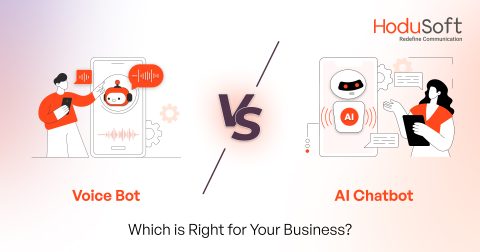
“I think what makes AI different from other technologies is that it’s going to bring humans and machines closer together. AI is sometimes incorrectly framed as machines replacing humans. It’s not about machines replacing humans, but machines augmenting humans.”— Robin Bordoli
This quote perfectly frames the transformative role of AI-powered digital assistants, such as AI chatbots and voice bots, in business. Rather than replacing human interaction, these technologies serve as powerful tools that enhance and strengthen human capabilities, enabling more efficient and meaningful communication between businesses and customers through an omnichannel contact center suite.
In today’s world, artificial intelligence (AI) is profoundly reshaping how businesses engage with their customers across multiple channels. Gone are the days when interacting with contact center software meant dealing with stiff, scripted answers or long call wait times.
Today, AI-driven conversational AI for business, including AI-based chatbots, WhatsApp bots, and AI voice assistants, is bridging the gap between organizations and customers in ways that feel natural, seamless, and effortless.
Businesses now face a pivotal choice: deploy a chatbot for business or a voicebot for business? Both offer automation, personalization, and round-the-clock service, but each brings distinct strengths to user experience, operational efficiency, and brand reputation.
This blog unpacks the key differences, benefits, and ideal use cases in the chatbot vs voicebot debate—helping decision-makers select the right AI solution for a future where humans and machines collaborate more closely than ever.
Relevance of chatbots & voicebots for modern CX
Do you know?
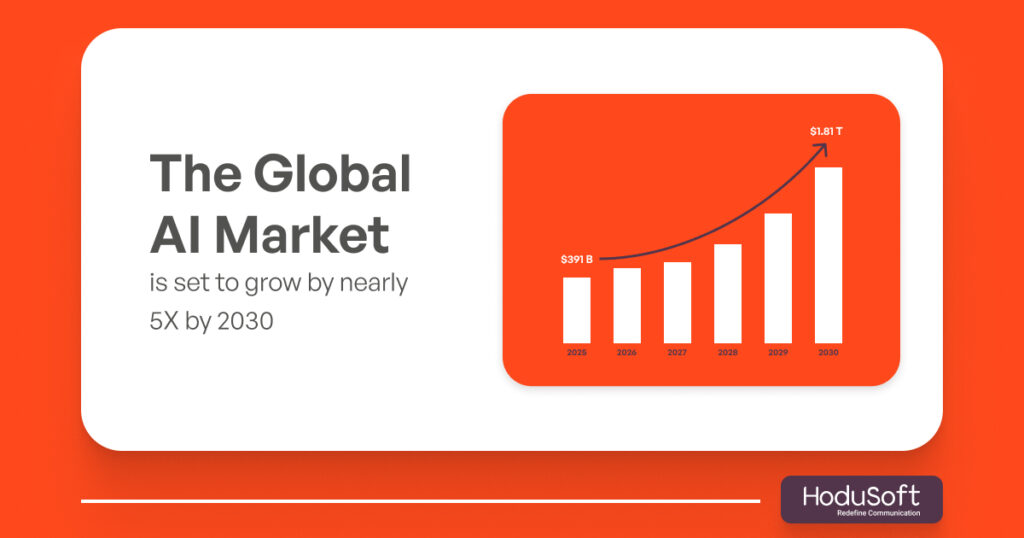
- The AI industry is projected to increase in value by around 5x over the next 5 years.
- About 83% of companies claim that AI is a top priority in their business plans.
- Approximately 1 in 3 organizations use Artificial Intelligence (AI).
- The Global AI is growing at a CAGR of almost 40%
- The global AI market is expected to reach $1.81 trillion by 2030
In today’s fast-paced world, customers expect instant, personalized, and seamless interactions whenever they reach out to a business.
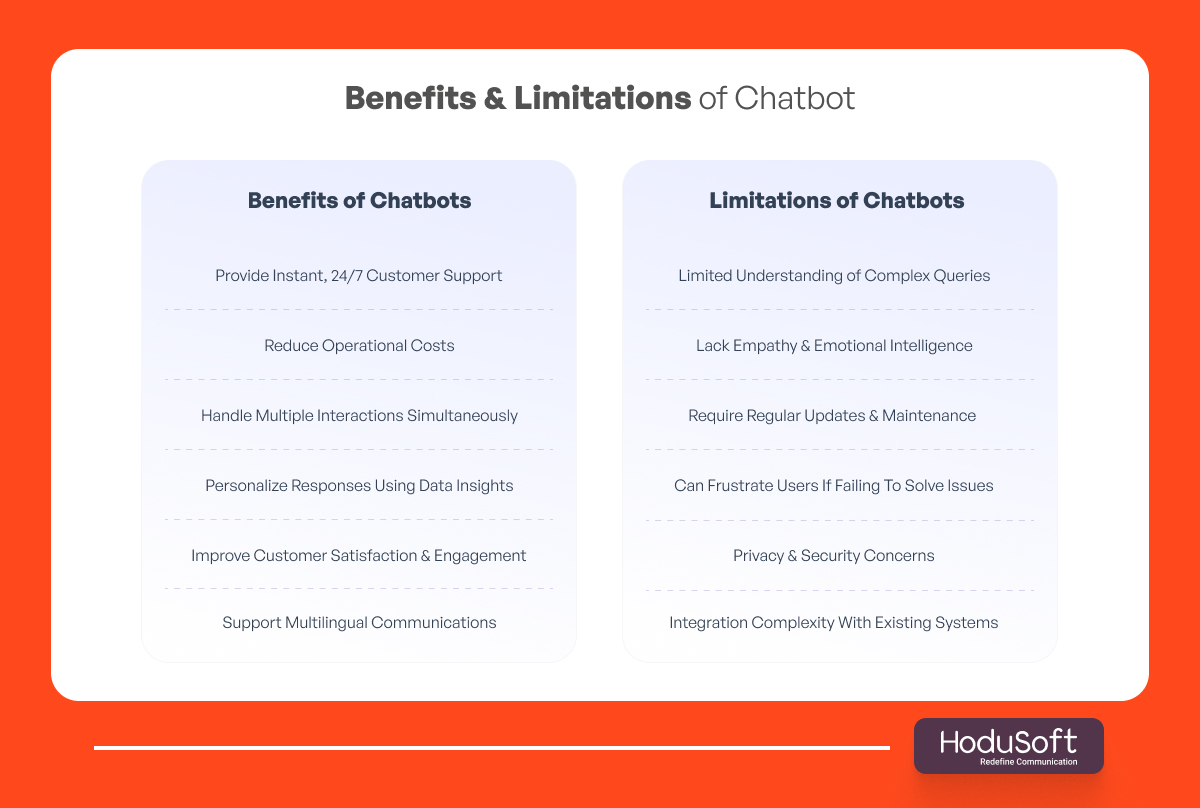
AI-based chatbots for business have become essential in meeting these expectations by providing round-the-clock support, answering queries instantly, and guiding customers through their journey via websites, apps, or messaging platforms like WhatsApp bots. These conversational AI tools free up human agents from routine questions, ensuring quicker resolutions and a more satisfying experience for customers across multiple channels.
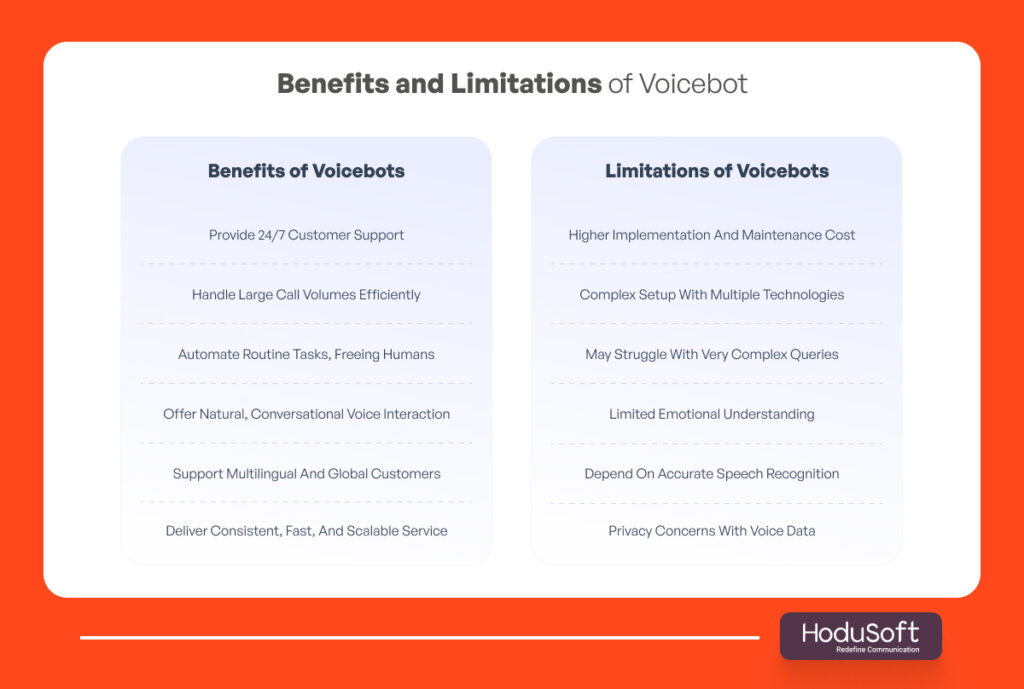
Voice bots for business, on the other hand, are also transforming customer interactions by offering a hands-free, natural way to engage via phone or voice-enabled devices. Powered by advanced AI voice assistants, these bots can understand speech, respond intelligently, and handle high volumes of calls without making customers wait. This means faster response times, consistent service quality, and accessible support for those who prefer speaking over typing.
Together, chatbots and voice bots form a powerful duo within an omnichannel contact center suite, delivering efficient, personalized experiences that boost customer loyalty and drive brand trust.
What is an AI Chatbot?
An AI chatbot is a smart text-based conversational technology designed to have natural, human-like conversations.
Using advanced technologies like natural language processing (NLP) and natural language understanding (NLU), it can engage with users through text, interpreting the meaning behind queries, providing personalized responses, and continuously learning from interactions to improve over time.
They are widely used in business environments to automate routine tasks, answer customer inquiries, and enhance overall communication efficiency. Think of it as a virtual assistant that’s always ready to chat, answer questions, and guide you—anytime, anywhere.
Unlike simple scripted bots, AI chatbots:
- Learn from every interaction.
- Get better at understanding what users need.
- Deliver personalized, context-aware responses.
Whether you’re asking about a product, booking an appointment, or troubleshooting an issue, these bots aim to make your experience smooth and efficient, acting like the friendly face of a business’s customer support team.
AI Chatbot in Practical Business Applications
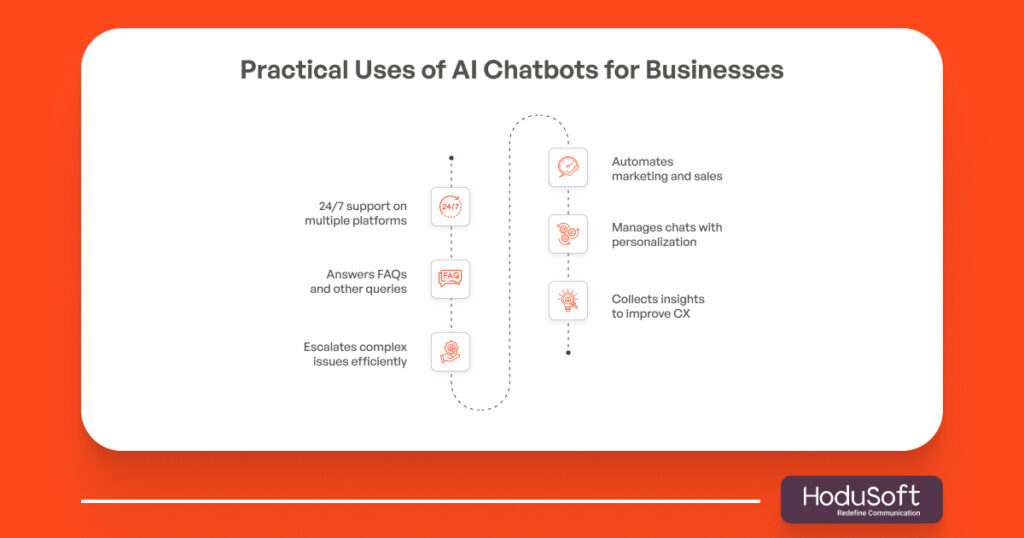
- AI chatbots act as around-the-clock virtual assistants, ready to help customers on websites, apps, and messaging platforms like WhatsApp.
- They handle common questions, guide users through tasks like booking or buying, and hand off complex issues to human agents smoothly.
- Beyond just customer service, these smart bots support marketing, sales, HR, and other departments by automating repetitive tasks and keeping conversations flowing naturally.
- By managing many chats at once with personalized care, they boost efficiency and free human teams to focus on what matters most.
- AI chatbots gather valuable insights from every interaction, helping businesses continually improve their service.
All these things make chatbots a vital piece of modern contact center software and omnichannel contact center suites.
What is a Voice Bot?
A voice bot is an AI-powered conversational technology designed to interact with users through natural spoken language.
Using advanced speech recognition (ASR) and natural language understanding (NLU), it understands voice commands, processes queries, and responds with human-like answers. It enables seamless, hands-free interactions where users can speak naturally to complete tasks, get information, or receive support.
Voice bots are widely used in business settings to automate phone-based customer service, schedule appointments, provide real-time assistance, and reduce wait times. Think of it as a virtual customer service agent that’s always ready to listen, assist, and guide callers—anytime, anywhere.
AI voice bots can:
- Understand conversational speech and context.
- Adapt responses based on user intent.
- Offer personalized, smooth voice interactions.
Whether you’re checking your account balance, booking a service, or troubleshooting an issue, voice bots aim to provide a smooth, natural experience, helping businesses deliver faster, more efficient, and more accessible customer service.
Voice Bot in Practical Business Applications
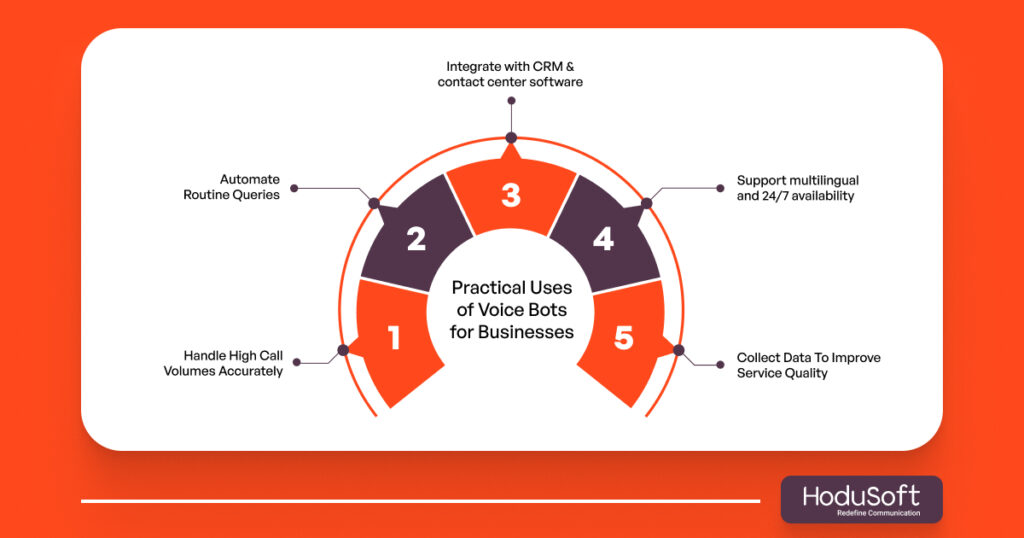
- Voice bots handle large call volumes with consistent accuracy.
- Automate routine inquiries, freeing human agents for complex calls.
- Integrate with CRM and contact center software for contextual responses.
- Support multilingual interactions and 24/7 availability.
- Collect data from conversations to refine service quality and customer insights.
With all these functionalities, voice bots have become an essential part of modern omnichannel contact center suites, enhancing customer experience with intelligent voice-powered automation.
Chatbot vs Voice Bot- Comparison
|
Feature |
Chatbot |
Voicebot |
|
Communication Mode |
Text-based (typing/chat) |
Voice-based (spoken language) |
|
Backend Technologies Used |
Artificial Intelligence (AI) Machine Learning |
Automatic Speech Recognition Text-to-speech (TTS) NLP/NLU Engine Language Detection |
|
Interaction Channels |
Websites, apps, messaging platforms |
Phone calls, smart speakers, voice devices |
|
Ideal Use Cases |
Quick info, FAQs, multitasking |
Hands-free, real-time conversations |
|
Technology Complexity |
Easier to implement |
More complex, requires speech tech |
|
User Accessibility |
Requires screen, visual interaction |
Accessible hands-free, good for visually impaired |
|
Response Format |
Text responses |
Spoken, human-like audio responses |
|
Personalization |
Based on user input, keywords |
Based on speech tone, context, intent |
|
Common Applications |
Customer chats, lead gen, ecommerce |
Appointment booking, call support, IVR |
|
Cost |
Cost-effective |
Relatively costly due to multiple backend technologies and call monitoring requirements. |
Benefits and Limitations of Chatbot
Benefits and Limitations of Voicebot
Chatbot or Voicebot: Which is Right for Your Business?
When it comes to choosing between a chatbot and a voicebot for your business, there are a few key points that you need to consider.
Know Your Users
First and foremost, it is vital to know who your audience is.
If your customers are younger, digitally native, or spend significant time on websites, apps, or messaging platforms like WhatsApp, a chatbot could be the ideal choice. It is important to note that chatbots excel where text-based support, quick self-service, and multi-tasking are common.
On the other hand, if your audience prefers speaking, needs hands-free service, or regularly interacts through phone calls, voicebots deliver a more natural, accessible experience—especially for older demographics or industries like healthcare and travel where real-time voice support matters most.
Business Type and Support Needs
Another important thing to consider is your business type and support needs. For instance, E-commerce businesses might find chatbots best for managing order inquiries, tracking, and FAQs.
In contrast, enterprises handling a high volume of phone queries, such as insurance or banks, can gain efficiency from voicebots managing scheduling, routine calls, and customer authentication.
Based on factors like support scenarios, customer environments, and the resources you want to dedicate, businesses can choose between chatbots and voicebots.
Customization: Omnichannel Strategies and Channel Blending
The ideal solution often blends both technologies.
Modern platforms enable seamless integration of chatbots and voicebots within omnichannel contact center software, allowing conversations to start with chat and escalate to voice as needed.
This flexibility supports wide-ranging user preferences and complex support journeys.
When Combining Both Makes Sense
For many organizations, deploying both Chatbot and Voicebot delivers the best of both worlds: personalized, efficient, and scalable support across every customer touchpoint.
Conclusion
Choosing between a chatbot and a voicebot isn’t a one-size-fits-all decision; it’s about matching technology to user needs, business context, and support strategy. Ultimately, the strongest approach for most businesses lies in blending both technologies as part of an omnichannel contact center suite. By combining chatbot and voicebot experiences, businesses can deliver more flexible, personalized, and accessible support for every customer, at every touchpoint.
Many contact center software providers these days offer seamless integration of AI-powered chatbots and voicebots within their omnichannel platforms. One such powerful solution is the HoduCC Omnichannel CX Suite, which unifies customer communication across voice, chat, email, social media, and SMS channels. It enables smooth, context-aware interactions with customers, automates routine tasks, and offers real-time analytics to improve service quality continuously.
With advanced features like multi-level IVR, intelligent routing, and WhatsApp Business Calling integration, HoduCC helps businesses deliver consistent, scalable, and secure customer experiences tailored to their unique needs—paying only for what they use.
To learn how HoduCC Omnichannel CX Suite can transform your customer service and boost business growth, get in touch with our experts today. Unlock the power of unified, AI-driven customer engagement.
Ready to enhance your customer experience? Request a free demo now!
Chatbots communicate via text on websites and apps, while voicebots interact using speech on phone calls or smart devices.
Chatbots are generally less expensive to implement, while voicebots require advanced speech technology and higher ongoing maintenance.
Yes, combining both as part of an omnichannel strategy offers greater flexibility and enhances customer experience by catering to diverse user preferences.
Consider your user demographics, business type, support needs, and preferred interaction channels to determine which technology fits best.
Many modern AI-powered bots offer multilingual support, making them suitable for global audiences and diverse customer bases.