
Hodusoft

Table of Content

Want a Perfect Solution for Your Business Communication Needs?

Connect with HoduSoft Experts Now!

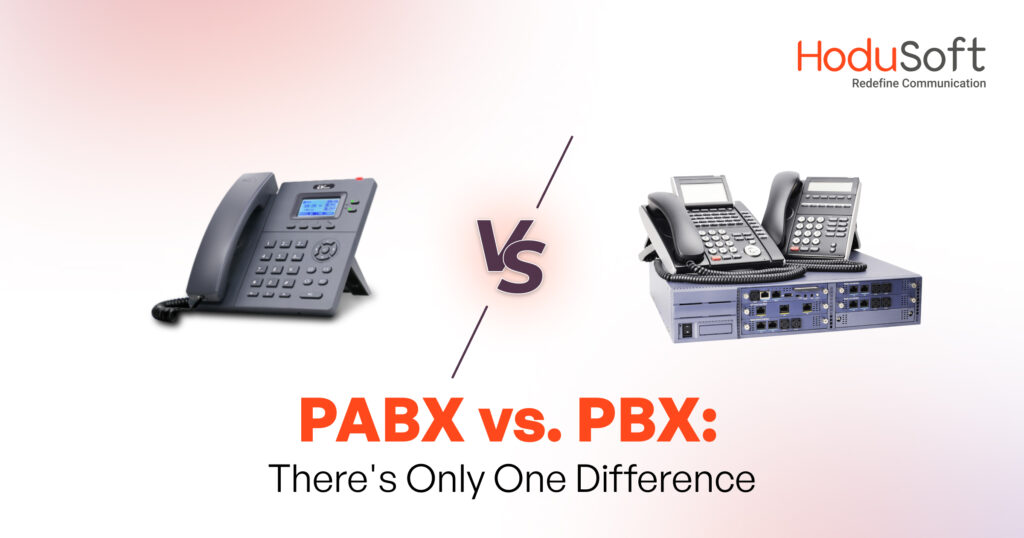
PABX vs. PBX: There’s Only One Difference

PABX vs. PBX: There's Only One Difference

If you are a business evaluating your communication setup, it is quite natural to feel confused about whether to adopt PBX or PABX. These terms are often used interchangeably by vendors, consultants, and even documentation, making the decision seem more complicated than it actually is.

Yet, choosing the right system matters, because your phone infrastructure directly affects customer experience, internal coordination, and long-term scalability.

Interestingly, this confusion is not limited to businesses alone. Across tech communities and telecom discussions, professionals repeatedly question whether PBX and PABX are actually different systems or simply different names for the same thing.

On forums and social platforms, the consensus is clear: most of the confusion exists because of terminology, not technology. In this blog post, we will discuss what PABX and PBX are, their differences, and how to choose the right one for your business.

What Is PABX?

A PABX (Private Automatic Branch Exchange) is a business phone system that automatically routes incoming calls and outgoing calls across an organization without requiring a human operator. Unlike manual exchanges, modern PABX systems use software-driven logic to handle call routing, call forwarding, voicemail, and interactive voice response. These systems form a private telephone network within an organization while connecting seamlessly to external phone lines such as the public switched telephone network or VoIP trunks.

Today, modern PABX systems are largely IP-based. Many organizations deploy IP PBX or cloud based PABX solutions that run over an internet connection using internet protocol and session initiation protocol. This allows businesses to integrate conferencing and collaboration tools, support mobility and remote work, and easily scale phone lines as the number of employees grows. For companies looking to upgrade existing traditional landline telephone systems, PABX offers advanced features without the complexity of legacy hardware.

Did you know?

Industry reports show that over 65-70% of new business phone deployments globally are IP or cloud PABX-based, replacing traditional landline setups.

Businesses using PABX phone systems report up to 30-40% reduction in communication costs by consolidating voice, voicemail, and data on a single network.

A typical PABX can support hundreds of internal calls simultaneously while routing external traffic digitally, something manual systems cannot achieve.

What Is PBX?

A PBX (Private Branch Exchange) is the foundational concept behind business telephony. It refers to a private branch exchange that connects internal phone networks within an organization and links them to outside lines. In early implementations, traditional PBX systems required operators to manually connect phone users, using separate direct landlines linked to a central switchboard.

Over time, PBX evolved from manual to automated systems. This is where the terminology confusion begins. Technically, a PABX is simply an automated form of PBX. In modern usage, however, PBX is often used as a broad term covering everything from traditional PBX to IP based PBX systems and hosted IP based PBX platforms. Whether on-premise hardware appliances or software-based deployments, PBX systems still serve the same purpose: managing phone lines, routing calls, and enabling business communication.

Did you know?

Legacy traditional PBX systems still exist in many enterprises, but analysts estimate that more than 50% are actively planning migration to IP or cloud-based PBX alternatives.

Organizations running older PBX infrastructure spend up to two times more on maintenance and power supplies and failover mechanisms compared to modern IP solutions.

PBX systems remain popular in regulated industries where businesses want full control over their private business phone networks and call data.

PABX vs PBX: What’s Similar, What Not

Aspect

Private Automatic Branch Exchange (PABX)

Private Branch Exchange

(PBX)

Automation

Automation is standard

Originally manual, now automated

Technology

IP-based or cloud-based

Previously wired, now IP-based

Features 

More automated features 

Features vary as per system 

Scalability 

More automation, more scalable 

IP PBX systems offer high scalability 

Legacy meter

No signs of legacy presence

Legacy presence fading in IP PBX 

Priority 

Deployment and scalability 

To keep up with clients’ demands 

PBX vs. PABX: Differences and Similarities

When it comes to terminology, the differences are often overstated. And the core function remains similar. Here are some differences between PBX and PABX:

1. Mostly terminology, not technology

In modern environments, PBX and PABX are often used interchangeably, even though both originate from the same concept of a private branch exchange. The term private automatic branch exchange simply highlights automation, which is now inherent in almost every system. As a result, the difference today is largely linguistic rather than technological.

2. Automation is now standard

Most organizations rely on PABX systems that automate everyday functions such as call routing, voicemail, and call transfers. What once required manual intervention is now handled by modern PABX systems, making automation a default capability rather than a distinguishing factor between PBX and PABX.

3. IP and cloud dominance

The widespread adoption of IP PBX and cloud based PABX solutions has reshaped business telephony. These systems run over the internet protocol, allowing calls to be routed digitally instead of through physical lines. This shift has minimized the relevance of traditional PBX definitions in modern deployments.

4. Identical core call features

Whether labeled PBX or PABX, today’s systems support the same essential capabilities, including call forwarding, handling high volumes of incoming calls, and managing outgoing calls efficiently. Features that were once premium add-ons are now baseline expectations across modern business phone platforms.

4. Scalability

Businesses now prioritize scalability for future growth over terminology. As the number of employees phone requirements increase, modern systems allow organizations to add extensions and lines quickly without major infrastructure changes, making flexibility far more important than naming conventions.

5. Legacy systems fading fast

Many organizations are moving away from traditional PBX infrastructure and traditional landline telephone systems due to high maintenance costs and limited flexibility. These legacy setups struggle to support modern business needs, accelerating the shift toward IP and cloud-based alternatives.

6. Deployment model matters most

Today, the real decision lies in choosing the right deployment approach, such as a hosted IP based PBX or an on-premise IP based PBX system. Factors like cost, control, scalability, and remote accessibility now matter far more than whether the system is called PBX or PABX.

Which One Should Your Business Choose Based on That Single Difference?

Which One Should Your Business Choose Based on That Single Difference?

The choice depends on control, ownership of the system, and how you plan to scale. Here are some tips to help you with it.

1. Choose PABX for automated call handling

A private automatic branch exchange is ideal for businesses that want seamless automation across daily communications. Modern PABX systems handle call routing, call transfers, and voicemail without manual intervention. This reduces dependency on operators, improves response times, and ensures consistent call management even during high call volumes.

2. Choose PBX only for legacy setups

A private branch exchange may still suit organizations running traditional PBX infrastructure tied to traditional landline telephone systems. These setups often rely on existing hardware and fixed phone lines. While functional, they lack automation and flexibility, making them practical only when replacement or modernization is not immediately feasible.

3. Prefer PABX for scalable growth

If your business is expanding, a PABX phone system offers better scalability for future growth. As the number of employees phone requirements increase, extensions and features can be added through software rather than new hardware. This makes PABX far more adaptable for growing teams.

4. PABX suits modern IP environments

Businesses operating in digital environments benefit from IP PBX platforms that run on internet protocol and session initiation protocol. These systems enable efficient call setup, digital routing, and easy integration with data networks, making PABX a natural fit for modern IT infrastructures.

5. PBX fits minimal call requirements

For small operations with limited needs, PBX may suffice when phone lines required features are minimal and employees phone lines required are fixed. In such cases, basic call connectivity is enough, and advanced automation or cloud features may not be a priority.

6. PABX supports remote teams better

Modern workplaces demand flexibility, and cloud based PABX solutions support mobility and remote work far more effectively. Employees can connect from anywhere using softphones or mobile devices, while the system maintains centralized call control and consistent communication experiences.

7. PABX aligns with future upgrades

For organizations planning to modernize, PABX offers a smoother path for pabx to the cloud and helps upgrade existing traditional landline infrastructure. This future-ready approach allows businesses to adopt new features gradually without disrupting ongoing operations or replacing everything at once.

Key Considerations for Choosing Between PABX and PBX

Key Considerations for Choosing Between PABX and PBX

When it comes to choosing between PABX and PBX, here are a few things businesses must carefully evaluate before making a final decision.

1. Level of call automation required

Businesses must evaluate how much automation they need in daily communications. A private automatic branch exchange or PABX system provides advanced call routing capabilities, automated transfers, and voicemail management, reducing reliance on manual operators. If seamless automation is critical for efficiency and faster response times, PABX is typically the preferred choice over traditional PBX.

2. Existing telephony infrastructure

The decision often depends on current setups like traditional PBX or traditional landline telephone systems. Organizations with legacy infrastructure may choose to continue with PBX to avoid immediate replacement costs. However, maintaining outdated systems can limit scalability and automation, making careful assessment of existing equipment essential before choosing a new system.

3. Business size and growth plans

For growing organizations, scalability is key. Systems supporting scalability for future growth and accommodating the number of employees phone requirements are essential. PABX systems allow businesses to add extensions, lines, and features without extensive hardware upgrades, making them ideal for companies expecting expansion or changes in team size.

4. Support for IP and cloud

Modern businesses often require connectivity via IP PBX, cloud based PABX solutions, and internet protocol networks. These technologies enable digital call routing, integration with VoIP, and remote accessibility. Choosing a system that supports IP and cloud ensures compatibility with modern telecommunication environments and future-ready infrastructure.

5. Remote work and mobility needs

Organizations supporting mobility and remote work benefit from systems integrating VoIP technology. Employees can connect through softphones, mobile apps, or cloud interfaces while maintaining centralized communication management. PABX systems with these features provide flexibility for distributed teams and remote operations.

6. Maintenance and upgrade costs

Operational costs, including power supplies and failover and other supplies and failover mechanisms, must be considered. PABX systems generally reduce maintenance requirements compared to legacy PBX setups, offering software-driven upgrades and cloud options that minimize downtime and lower ongoing expenses.

7. Long-term scalability and flexibility

Future-proofing is crucial, and businesses should consider PABX to the cloud and modern PABX systems for long-term flexibility. These systems allow smooth expansion, feature upgrades, and adaptation to changing technology standards without major overhauls, ensuring the organization remains agile in its communication capabilities.Upgrade your business communications today with HoduSoft’s cloud-based PBX solutions. Streamline call routing, enhance remote work capabilities, and scale your phone system effortlessly.

Taking Everything Into Consideration

Choosing between PBX and PABX today largely comes down to a single factor: automation and scalability. While traditional PBX systems may still serve legacy setups, modern businesses overwhelmingly benefit from PABX systems that offer automated call routing, cloud integration, and support for remote work. The distinction is no longer about manual versus automatic. It is about future-proofing communications and ensuring seamless operations as the business grows.

This is where HoduSoft comes into the picture. With advanced cloud-based PABX solutions and IP PBX systems, HoduSoft enables businesses to transition from legacy setups to modern, scalable, and fully automated phone networks. Their solutions support mobility, interactive voice response, call forwarding, and conferencing tools, allowing businesses to enhance efficiency, reduce communication costs, and deliver superior customer experiences both in-office and remotely.

HoduSoft simplifies the upgrade process, ensuring businesses can move to the cloud or integrate modern PABX systems without disrupting daily operations, making it the ideal partner for organizations looking to modernize their telephony infrastructure.

FAQs

1. What is the main difference between PBX and PABX?
The primary difference is automation. PBX originally required manual or operator-assisted call handling, while PABX is fully automatic, managing call routing, voicemail, and transfers without human intervention.
2. Can PABX work with cloud and IP networks?
Yes. Modern PABX systems are designed for IP PBX and cloud-based PABX solutions, supporting internet protocol and session initiation protocol for seamless digital communication.
3. Is PBX still relevant for businesses today?
PBX is mainly relevant for organizations using traditional PBX or traditional landline telephone systems. For most modern businesses, PABX provides better scalability, automation, and remote access.
4. How does PABX support remote work?
PABX allows employees to connect from anywhere using mobility and remote work features, including softphones, mobile apps, and cloud access, ensuring business calls are seamless across locations.
5. Why choose HoduSoft for PABX solutions?
HoduSoft offers cloud-based PABX solutions and IP PBX systems that integrate call routing, interactive voice response, and conferencing tools, helping businesses modernize, reduce costs, and improve communication efficiency.
Scroll to Top

    Schedule a meeting